
Hydrogen
Hydrogen, a key element of the energy transition
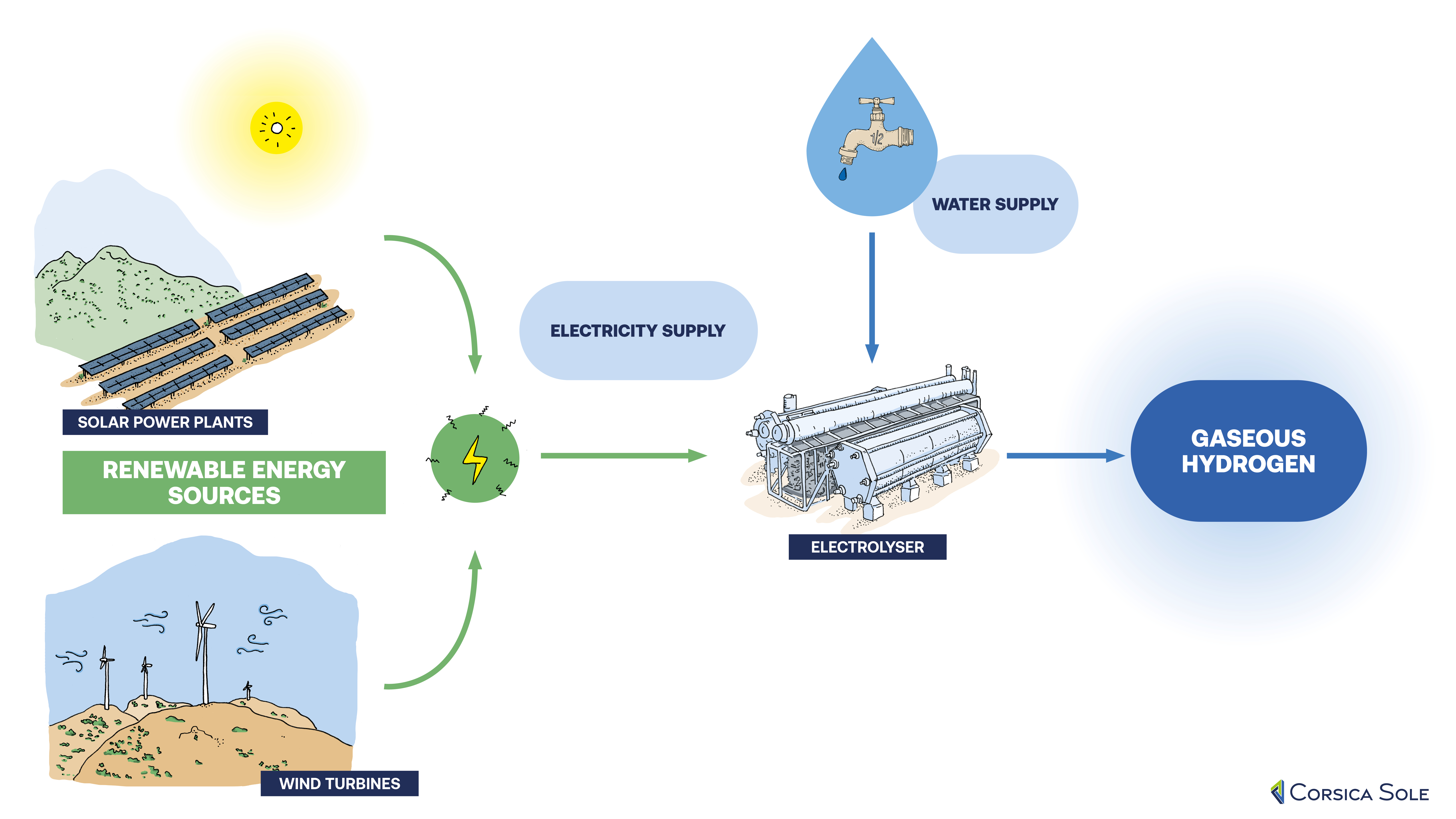
Renewable hydrogen is now recognised as a cornerstone of the energy transition. Produced from electricity and water through a process known as electrolysis, hydrogen becomes “green” when the electricity used comes from renewable sources.
This energy vector represents a major solution for decarbonising many sectors:
Hydrogen storage and use
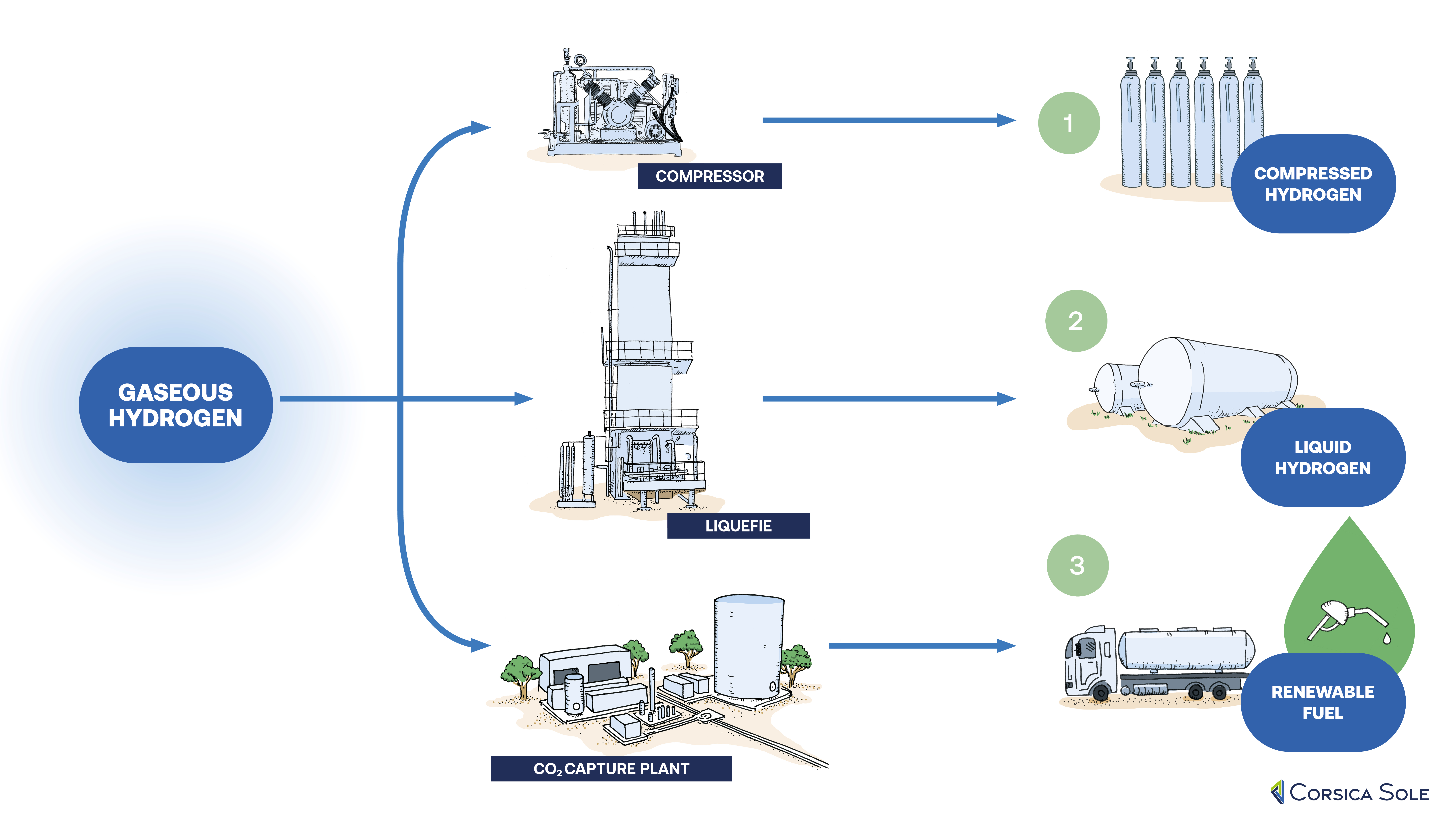
Hydrogen is produced in gaseous form and then stored in various ways: under pressure, in liquefied form, or combined with other molecules to create synthetic fuels. It can be used on site or transported, either to generate electricity or to be used directly as a fuel.
Hydrogen: Corsica Sole’s vision
In a fully renewable future, factories, vehicles and equipment will operate using a mix of renewable energies distributed through electricity grids, gas networks, batteries, fuel cells, turbines or engines, depending on uses and local contexts.
Several solutions will coexist — direct electrification, biofuels, synthetic fuels, and others — each adapted to specific territorial needs.
Corsica Sole is convinced that hydrogen will become a cornerstone of the European energy system by 2050, in line with the objectives of the European Green Deal “Fit for 55”.
Thanks to its strong roots in island territories, Corsica Sole has identified islands as ideal pilot areas for deploying these innovative systems, helping to reduce energy dependence and achieve carbon neutrality.
Corsica Sole’s positioning
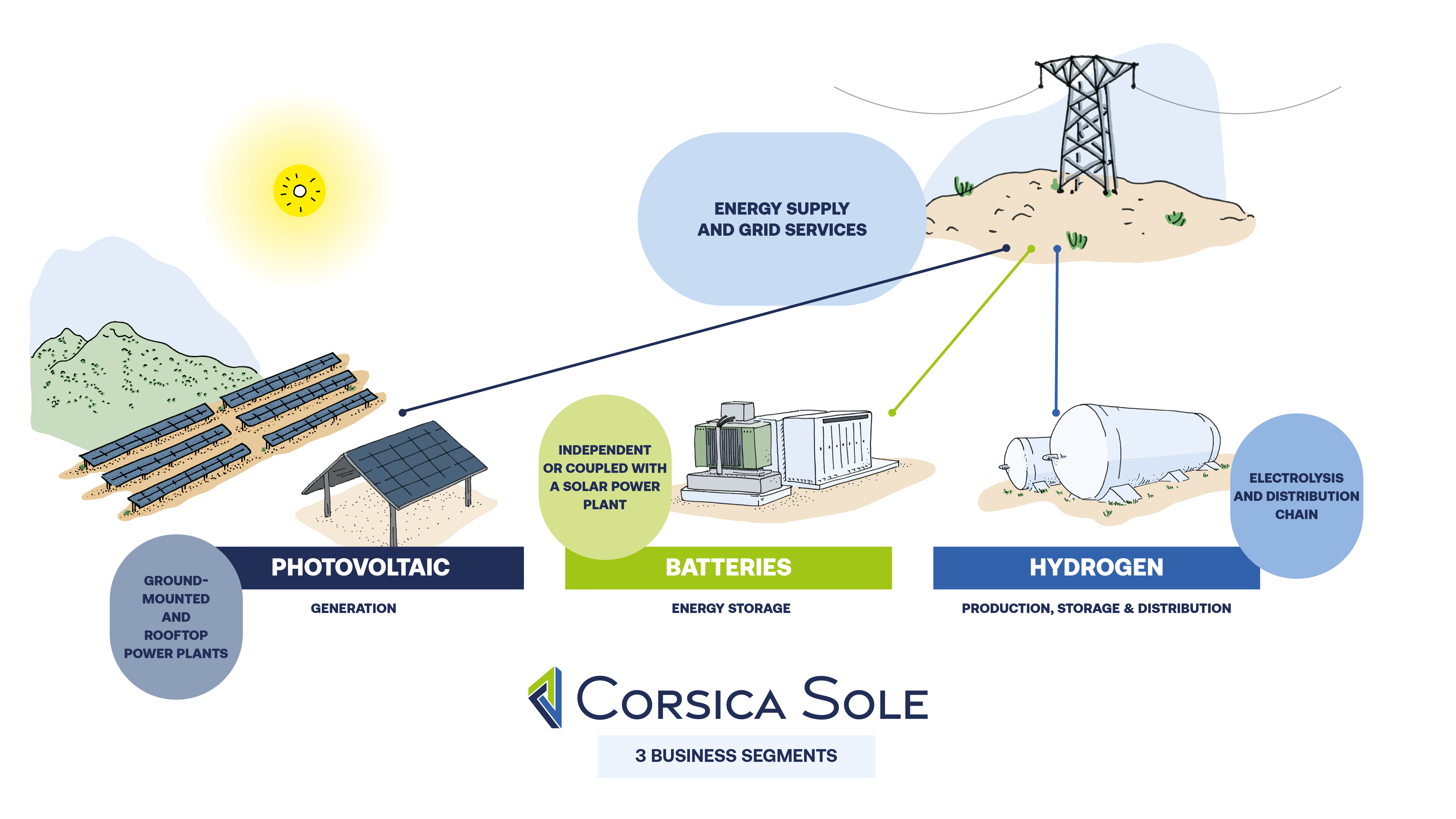
While the renewable hydrogen economy is still emerging, Corsica Sole—a major player in solar energy and energy storage—anticipated this trend by launching its green hydrogen production activity as early as 2022.
Our initial projects focus on deploying innovative industrial pilot plants to support R&D and pave the way for large-scale industrial roll-outs planned by 2030.
ALCHYMISTE: a foundational R&D project
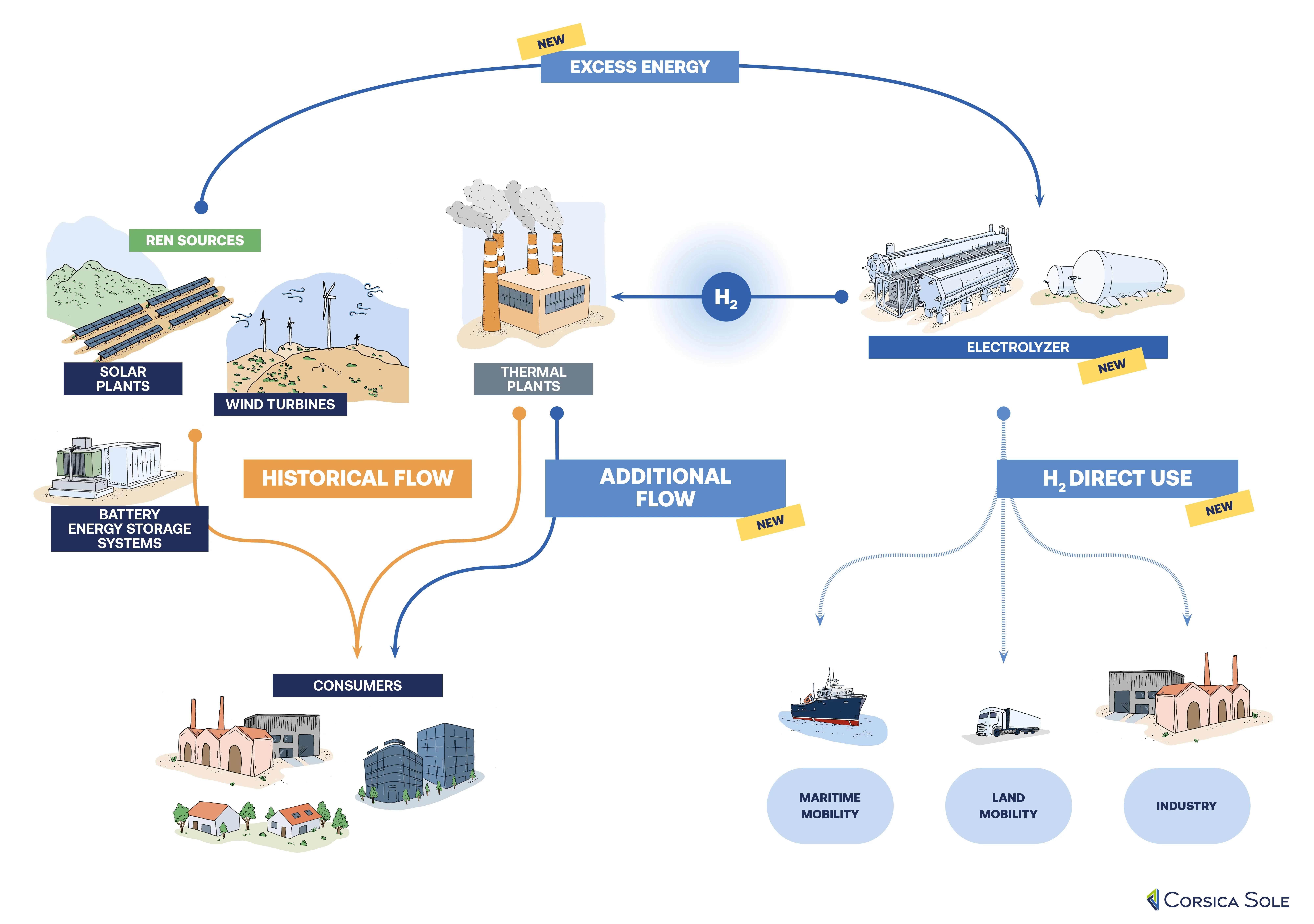

Corsica Sole is the initiator and leader of the ALCHYMISTE project, supported by France 2030 and selected as a winner of the i-Nov competition (Wave 11). The ambition of this project is to demonstrate that island territories equipped with thermal power plants can achieve carbon neutrality and energy autonomy by using hydrogen as a large-scale energy storage vector.
In particular, ALCHYMISTE will explore:
- the integration of large capacities of intermittent renewable energies (solar and wind) while ensuring the stability of the electricity grid;
- the conversion of existing thermal power plants so they can operate using hydrogen as a fuel, either as a complement to or a full replacement for conventional fuels.
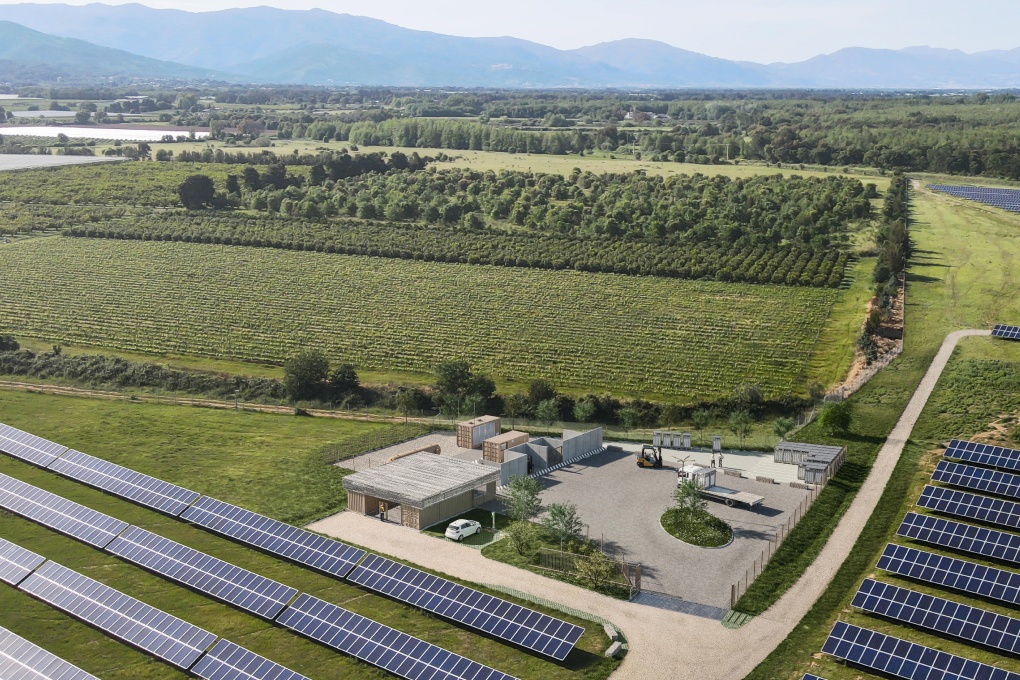
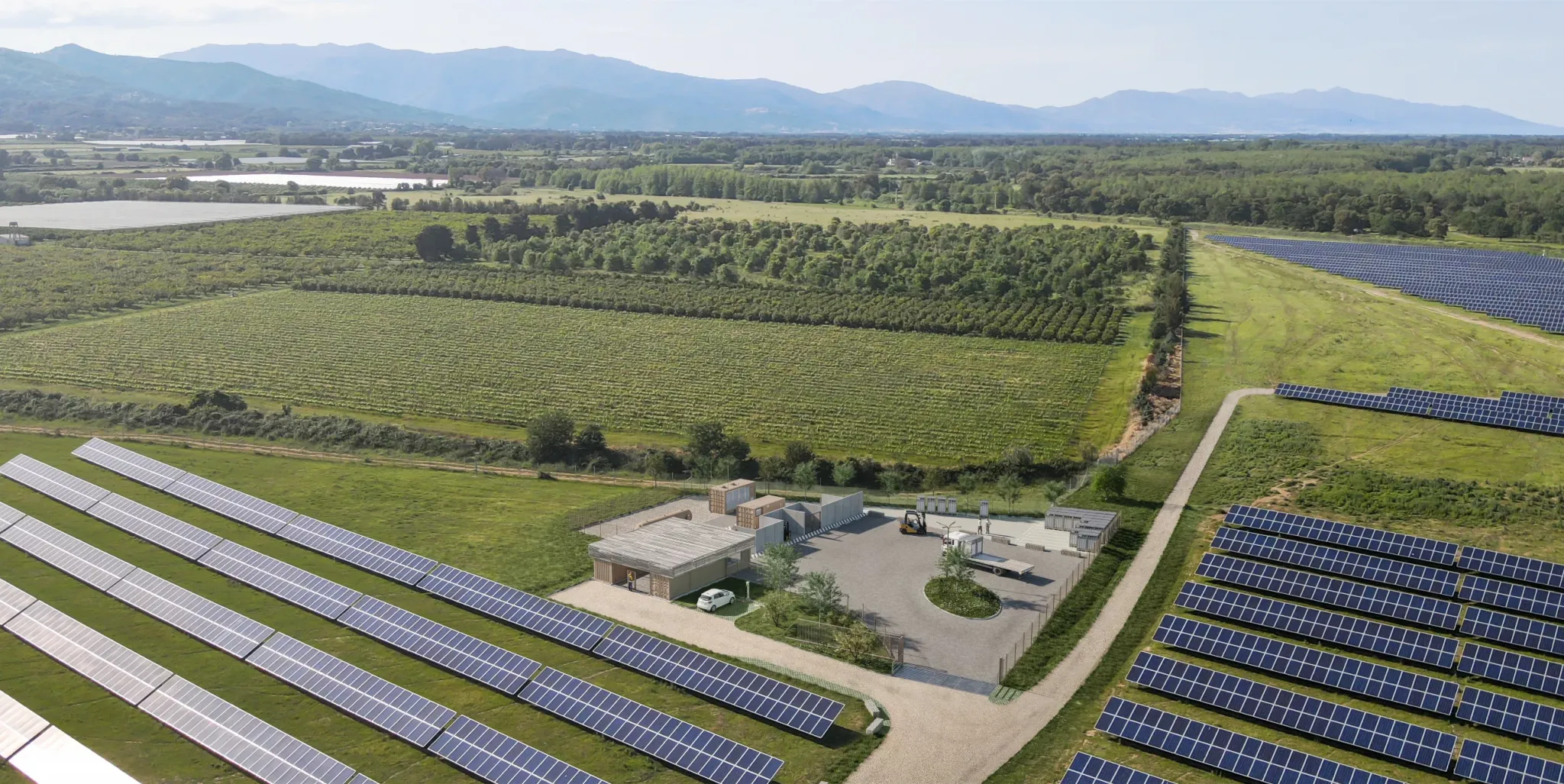
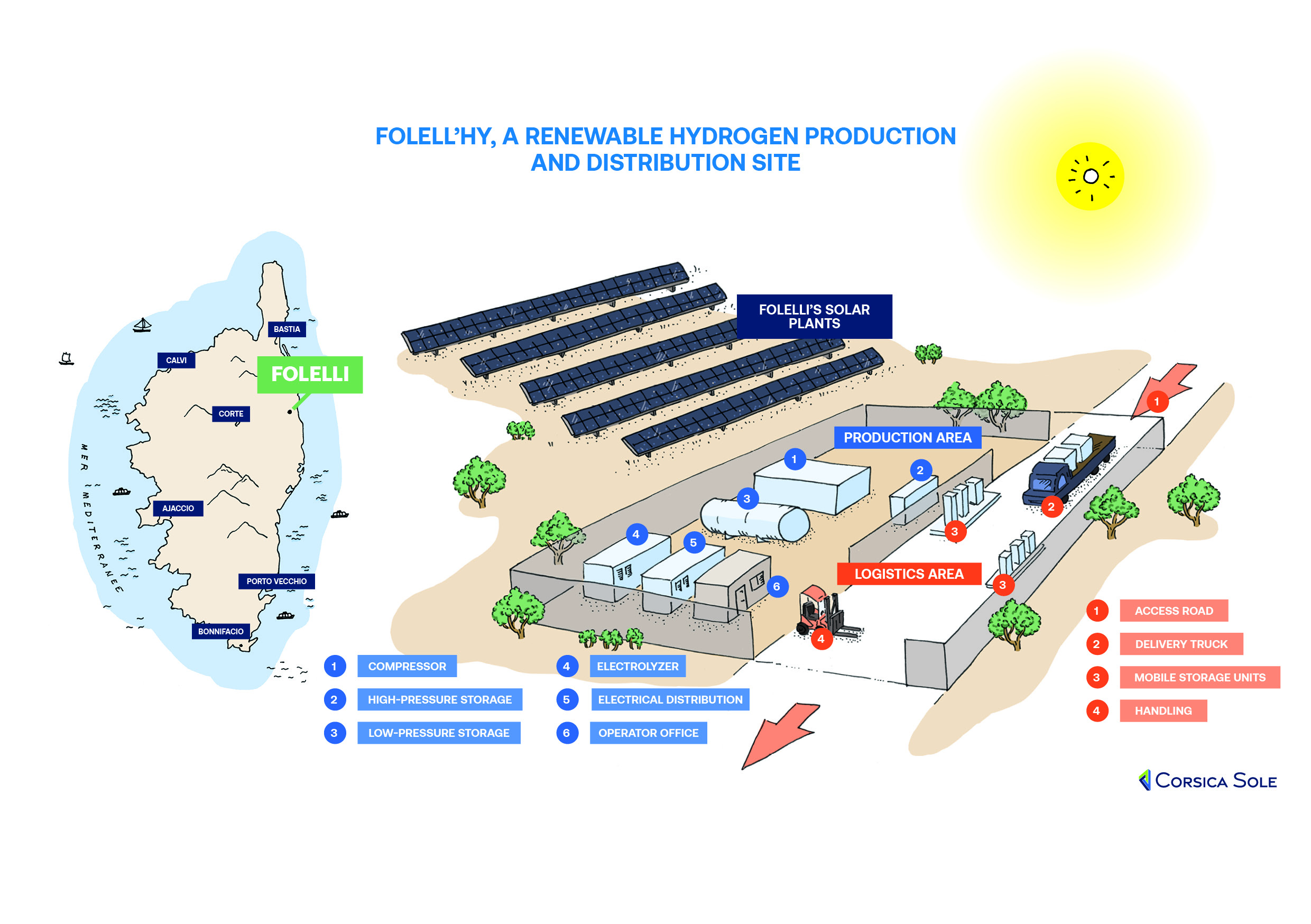
The project will run from 2024 to 2028 in Corsica, with the creation of an experimental site, Folell’Hy, located at the Folelli solar power plant near Bastia.
Folell’Hy: an experimental pilot site and Corsica’s first green hydrogen plant
Commissioned in 2017, the Folelli solar power plant (12 MWp) produces the equivalent of the electricity consumption of more than 3,000 households. It is regularly subject to production curtailments imposed to maintain grid stability, representing around 5% of its annual output.
This site is ideally suited for the ALCHYMISTE project: storing this surplus energy in the form of hydrogen using a real-time controlled electrolyser, then converting it back into electricity via a mechanical inertia generator.
Folell’Hy will be equipped with an electrolyser capable of producing 30 Nm³/h of hydrogen and a storage capacity of 100 kg of green hydrogen. This hydrogen will be made available to the first local users, including the vessel Alba of the Bastia Maritime and Aquaculture Vocational High School.
Alba: Corsica’s first hydrogen-powered training vessel
Alba, a 20-metre training vessel powered by 100% renewable hydrogen-electric propulsion, perfectly illustrates the potential of this technology.
During its operations, Alba emits only water, achieving an exemplary environmental footprint thanks to hydrogen produced at the Folell’Hy site.
The hydrogen is compressed at 300 and 500 bar, transported to the refuelling point, and then transferred to the vessel’s tanks via an innovative, compact and energy-efficient dispensing station.
This initiative paves the way for the development of a maritime hydrogen sector in Corsica, enabling other decarbonised vessel projects to emerge on the Island of Beauty.
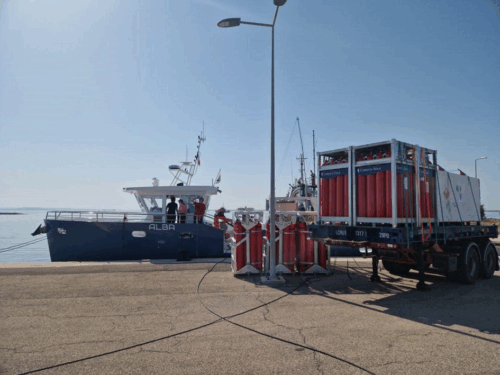
The hydrogen-powered vessel Alba of the Bastia Maritime High School and Corsica Sole hydrogen bundles