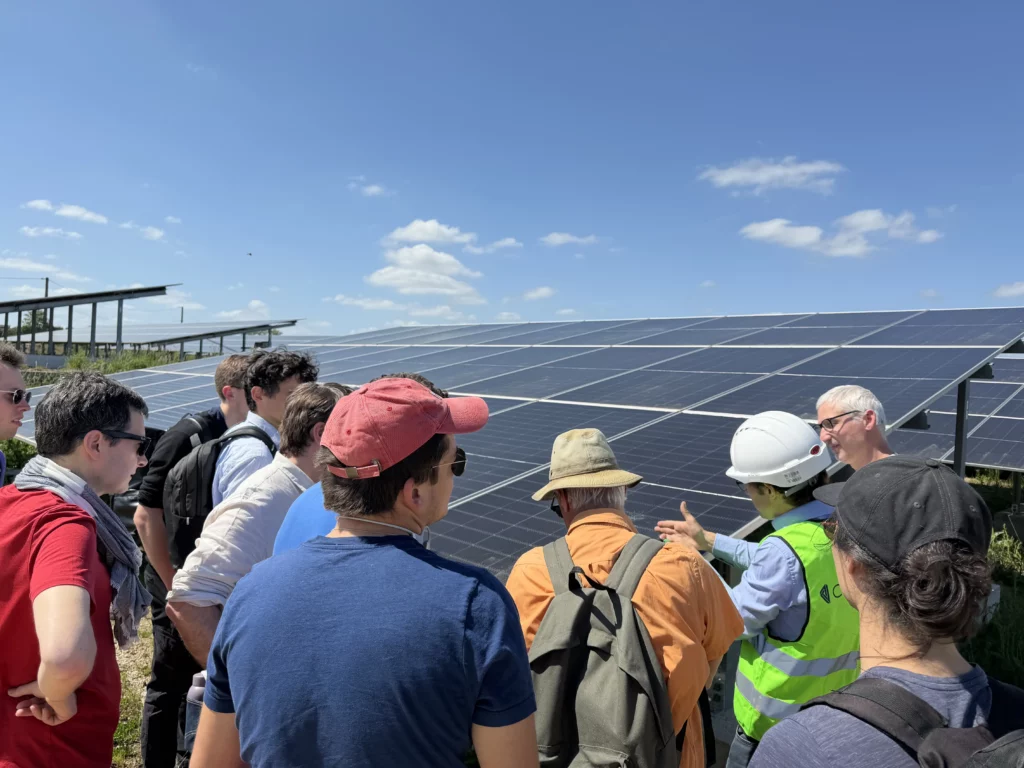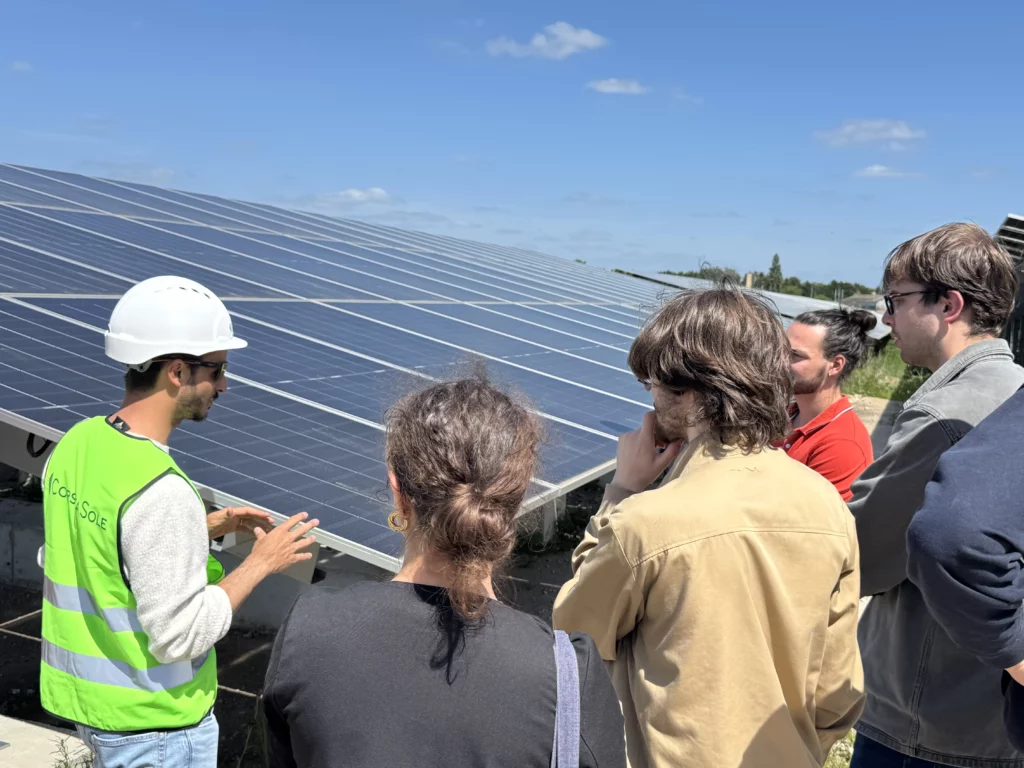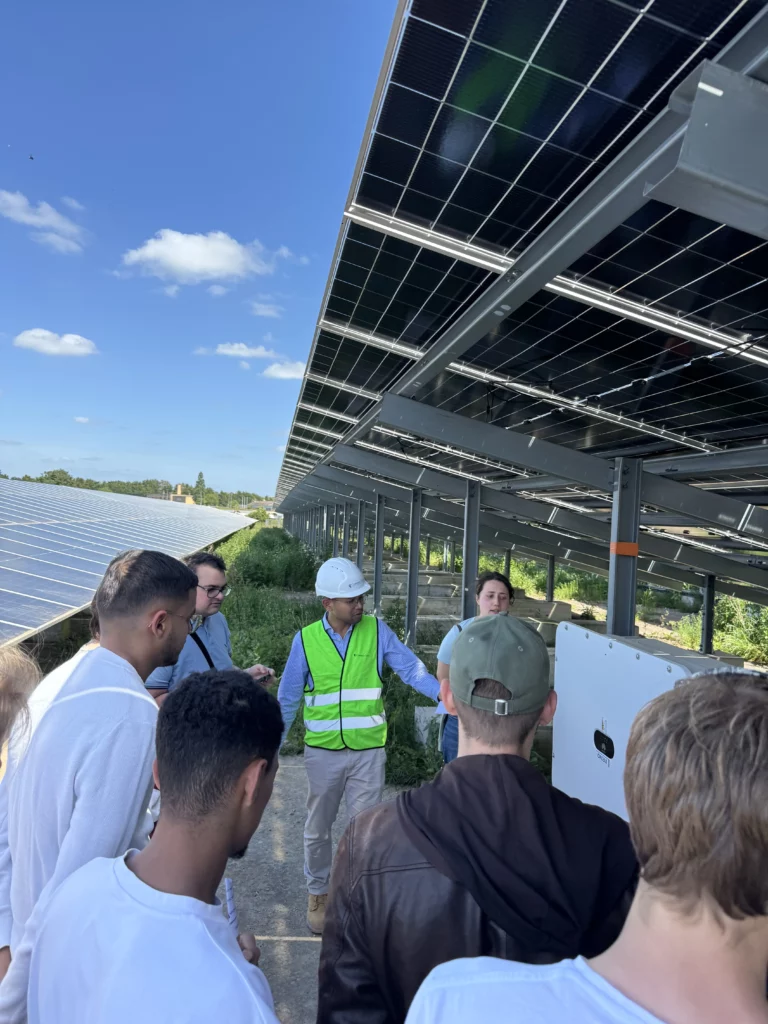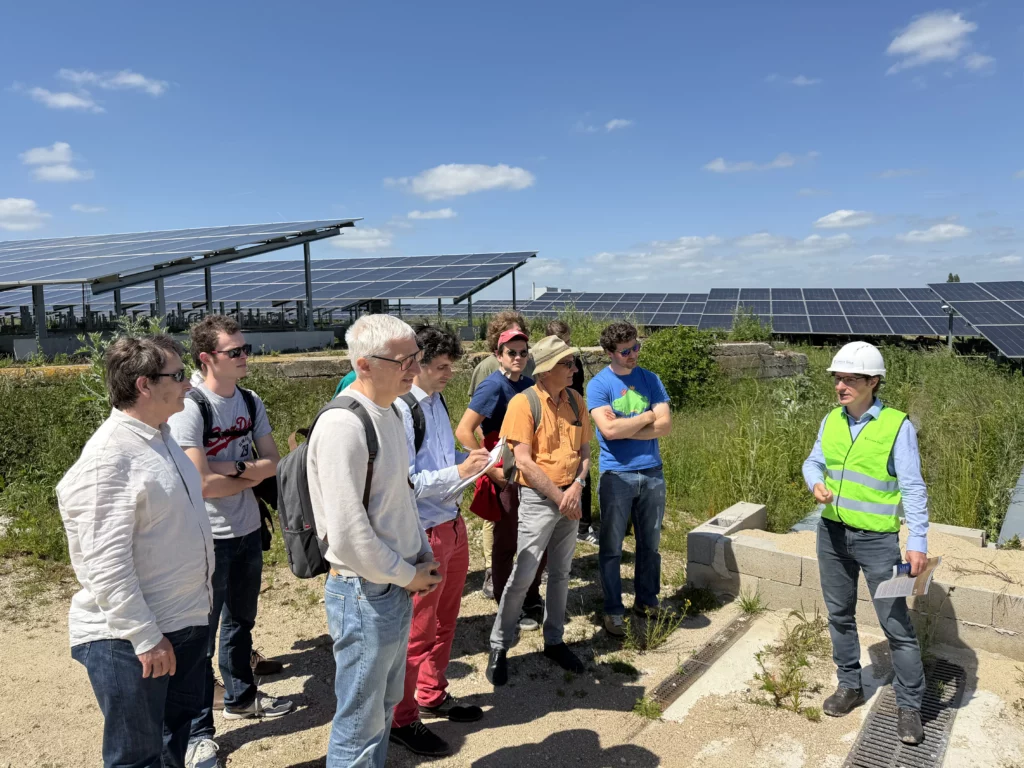
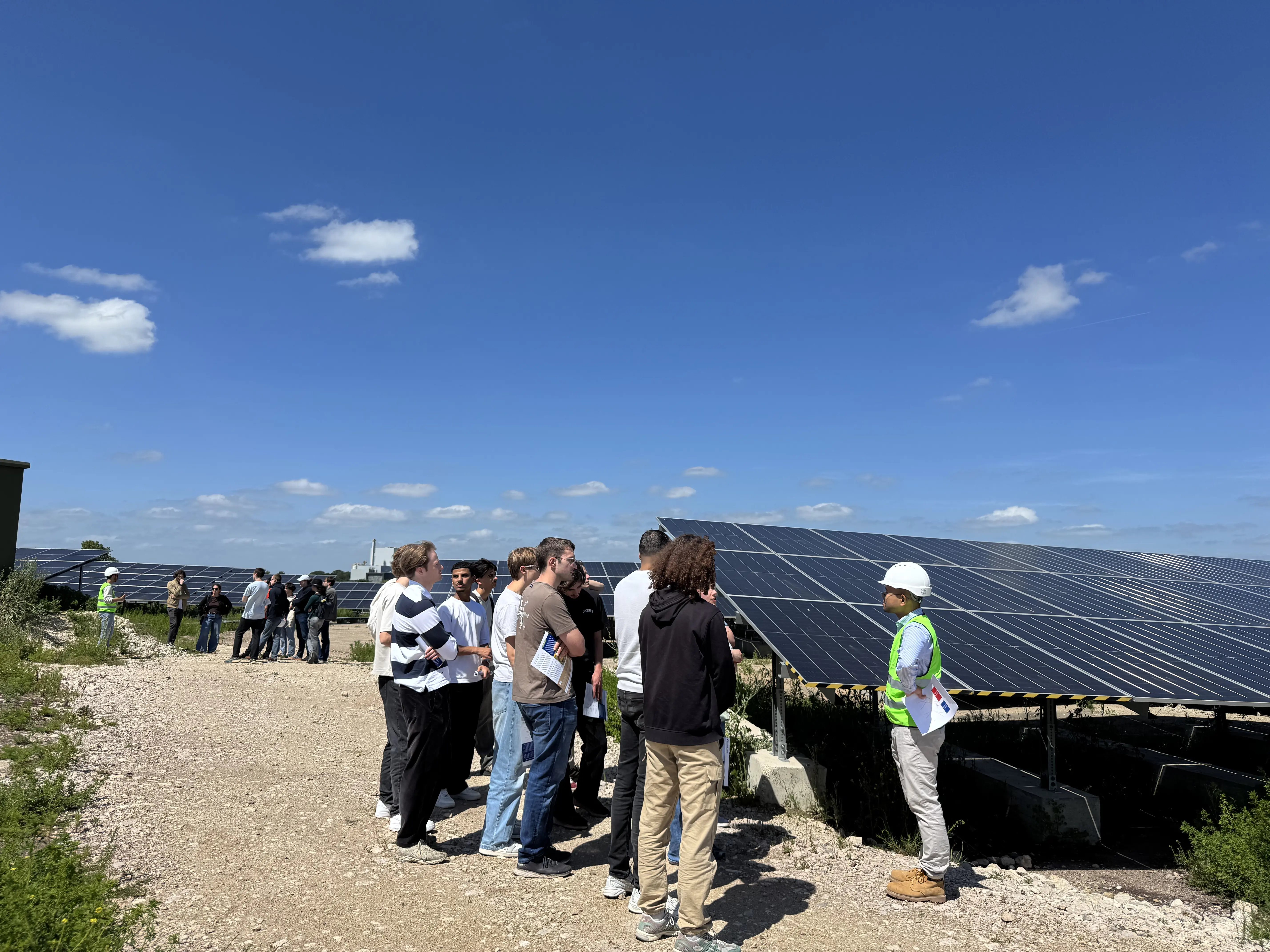
ENS Paris-Saclay visits the Pithiviers solar power station
Corsica Sole was delighted to welcome around fifty students, PhD candidates, lecturers and researchers from the ENS Paris-Saclay, studying for a Master’s degree in Electrical and Digital Engineering, to its solar power plant in Pithiviers. Some of them are also preparing for the agrégation.
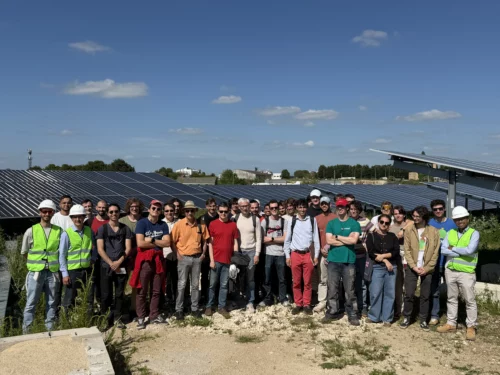
The aim of this educational visit was to give students a hands-on understanding of how a large-scale solar power plant works and to help them grasp the technical challenges involved in renewable energy production.
Although the students are already working on photovoltaic technologies as part of their course, many told us that until then they had only studied them through theoretical materials, diagrams or small-scale equipment used in practical sessions. Visiting a 12 MWp solar power station, comprising 20,000 panels spread over 11 hectares, thus provided a particularly memorable, real-world immersion.
During the visit, participants were able to learn how the facilities are operated, understand the challenges associated with grid connection, visit a substation and discuss technological developments in the photovoltaic sector with the Corsica Sole teams.
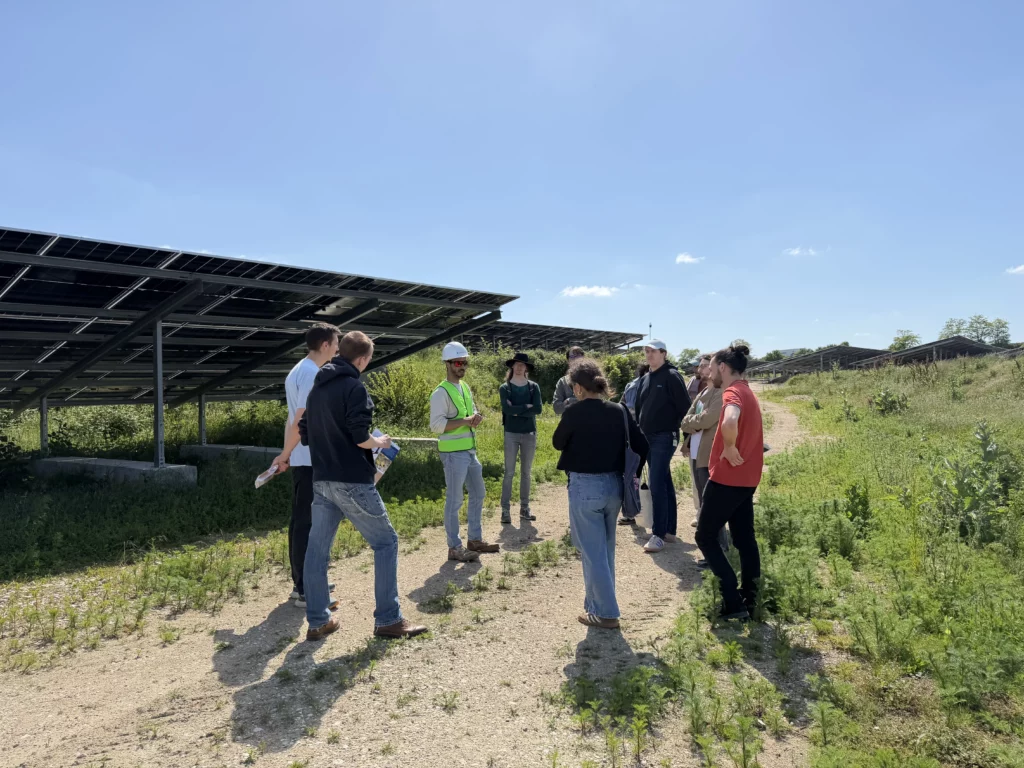
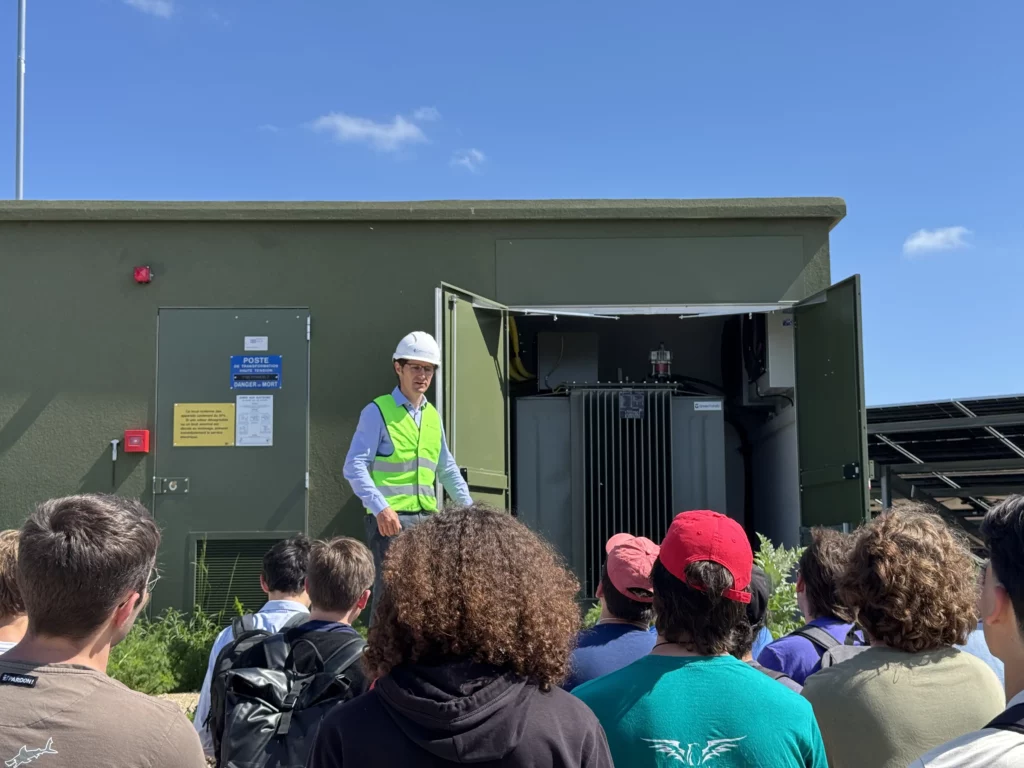
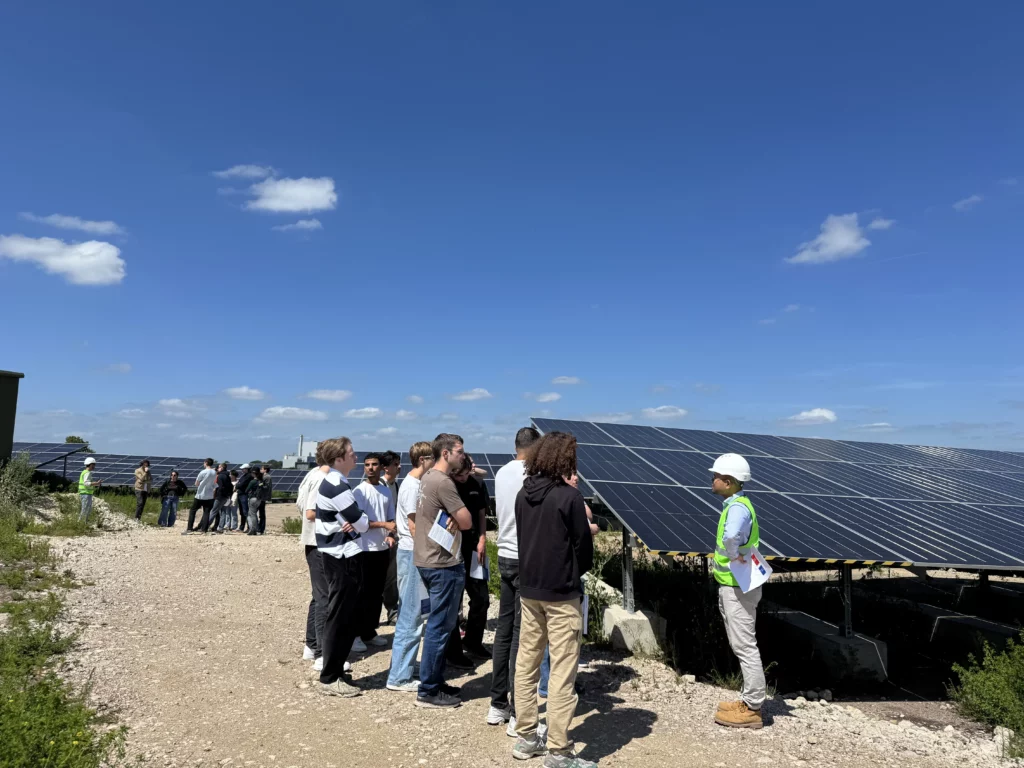
The tour was led by:
- Matthias Levy, Deputy Managing Director for Network Access and Technical Director
- Anthony Bonello, Director of Engineering, Operations and International Expansion
- Seiha Im, Deputy Director of Engineering
Their presentations covered a wide range of technical topics whilst providing a practical insight into the roles and operational challenges within the renewable energy sector.
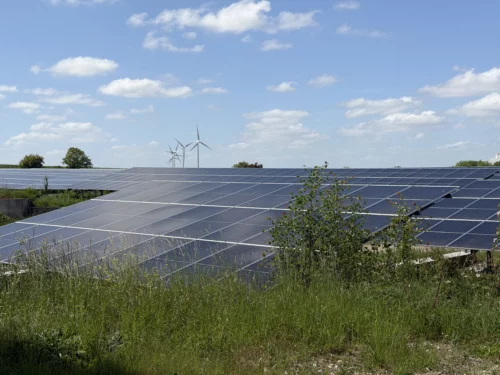
Located on a former industrial wasteland that has been converted into a renewable energy production site, the Pithiviers solar power station now generates 14 GWh per year, equivalent to the electricity consumption of around 9,000 people, including heating.
Through this initiative, Corsica Sole reaffirms its commitment to knowledge transfer and to bridging the gap between the academic world and those working on the ground in the energy transition. Today’s students will be tomorrow’s engineers, researchers and energy experts. Fostering these exchanges is essential to keeping pace with technological developments and building the energy systems of the future.