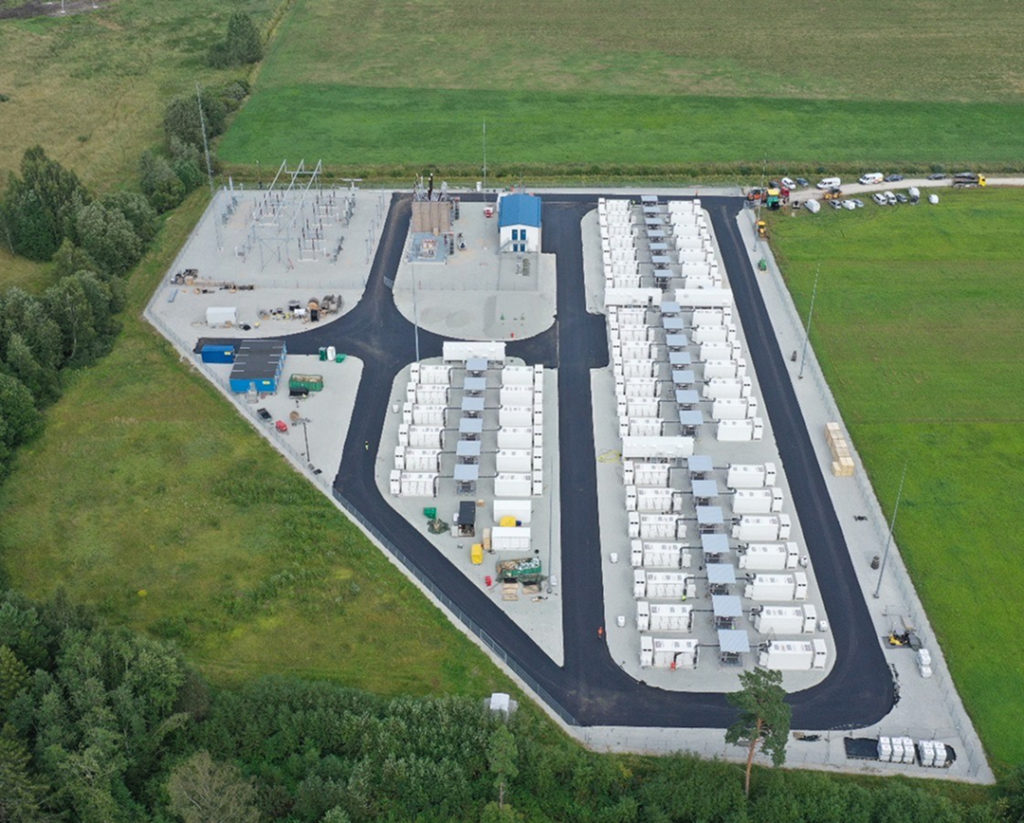
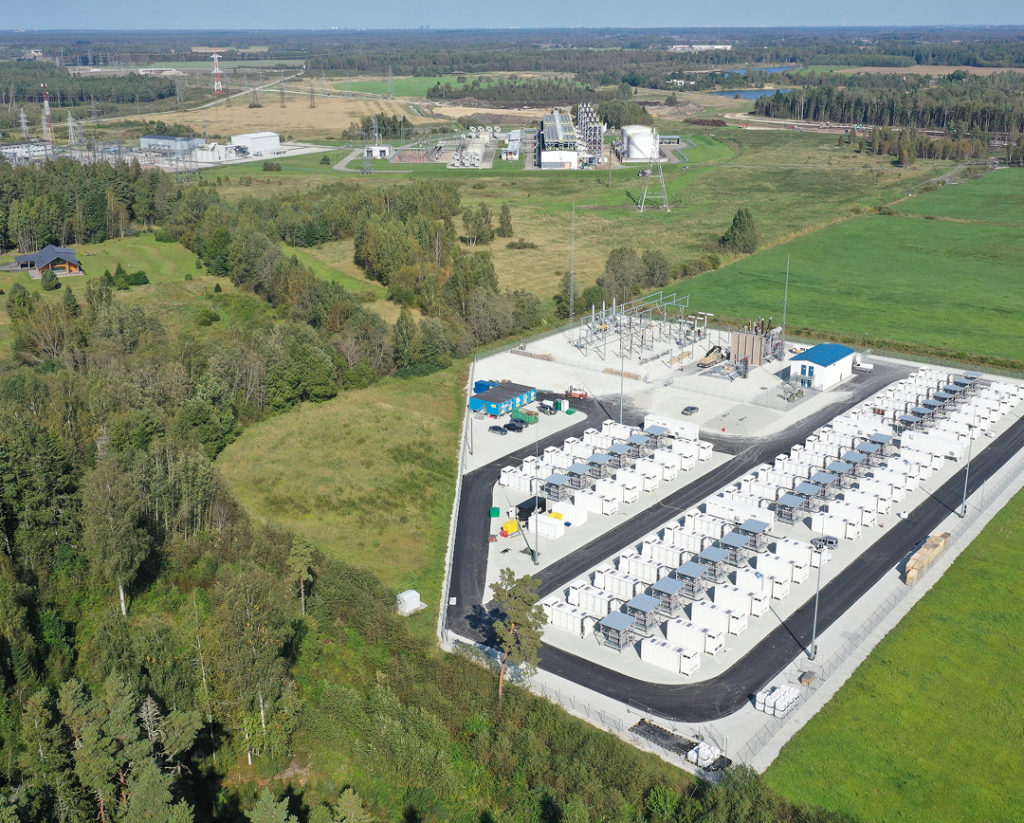
Located in Kiisa, Estonia, the Hertz 1 energy storage facility represents a decisive milestone for the energy stability of the Baltic States.
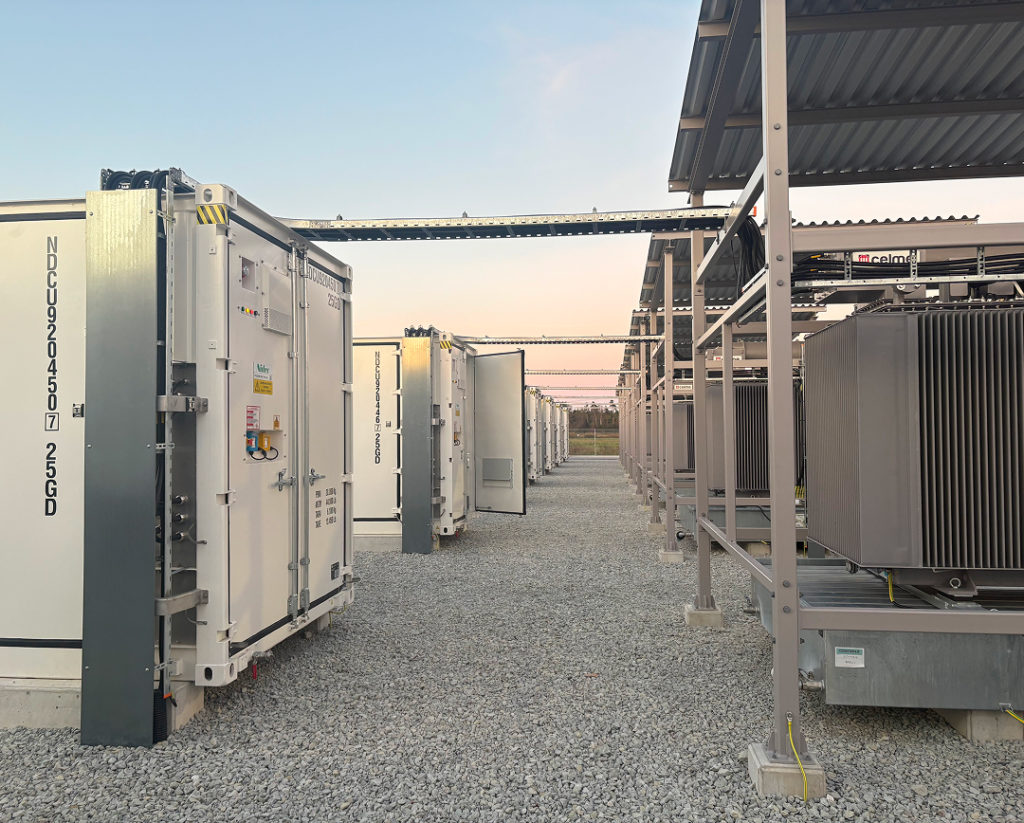
With an output of 100 MW and a storage capacity of 200 MWh, the facility is equipped with 54 lithium-ion battery containers. It is considered the largest energy storage facility ever built in continental Europe.
The largest energy storage facility in continental Europe
Designed to support the integration of the Baltic States into the European electricity grid by 2025, Hertz 1 provides essential services: frequency stabilisation, dynamic management of renewable energy surpluses on the grid, and the strengthening of regional energy independence.
This technological project directly contributes to Estonia’s objective of achieving 100% renewable electricity by 2030.
A strategic infrastructure for Baltic energy sovereignty
Hertz 1 plays a key role in the energy transition of a grid that remains heavily dependent on thermal power plants. By storing electricity generated during solar and wind peaks and reinjecting it when demand rises, the facility ensures a permanent balance between energy production and consumption, thereby guaranteeing grid stability.
Connected to the grid via a 330 kV underground cable — a first in Estonia — the installation is part of a new generation of infrastructure capable of supporting a more resilient, flexible and low-carbon electricity system.
A European alliance dedicated to energy storage
Developed by the Baltic Storage Platform (BSP), Hertz 1 brings together three partners:
Evecon, an Estonian energy company committed to the energy transition
Corsica Sole, a French pioneer in energy storage
Mirova, an international investor specialising in sustainable finance
This partnership combines technical expertise, industrial capabilities and sustainable financing around a shared ambition: to build a low-carbon, sovereign and scalable energy model capable of meeting Europe’s future needs.
Cutting-edge technology serving the grid
The project deploys state-of-the-art equipment, including lithium-ion batteries, medium-voltage and high-voltage transformers, as well as high-voltage substations specifically designed to deliver grid stabilisation services.
Thanks to these technologies, Hertz 1 can respond to frequency variations within fractions of a second — a service previously provided by oil- or gas-fired power plants.
Energy storage thus becomes an additional lever to reduce dependence on fossil fuels and accelerate the integration of renewable energy across the Baltic region.
A flagship project of the European energy transition
Hertz 1 goes beyond its technical dimension, paving the way for a new generation of energy storage facilities capable of ensuring stability, security and flexibility across the European grid.
By providing a concrete response to the challenges of decarbonisation, the facility symbolises a major step forward for Northern Europe. Beyond its role as a pillar of Baltic energy sovereignty, it also serves as a replicable model for future large-scale energy storage infrastructure across Europe.
Hertz 1 symbolises the strength of collective action: by bringing together complementary expertise, we demonstrate that it is possible to address the challenges of the European energy transition through concrete and ambitious projects.
With Hertz 1, we are reaching a decisive milestone: for the first time in continental Europe, an energy storage facility of this scale will ensure continuous grid stability while enabling renewable energy to play its full role.
Our commitment alongside the Baltic Storage Platform reflects a strong conviction: investing in energy storage means investing in Europe’s energy future and in the independence of its territories.